What to Do After a Fender Bender
Stop, check for injuries, exchange information, document the scene, then decide together whether to file a claim at all.
Free to compare
Why the first few minutes matter more than the claim
A fender bender feels small, but what you do in the first few minutes decides how smooth the rest goes. Getting names, insurance information, and photos at the scene means nobody is relying on memory later. It also protects your grandchild if the other driver's story changes once everyone has driven away.
Who was driving matters here in a specific way. If your grandchild drives your car regularly, this is almost certainly a claim on your policy, not a separate event that stays off your record. Insurers follow the car's policy first, then look at the driver, so the crash shows up where the car is insured even though your grandchild was behind the wheel.
Whether to actually file a claim is a separate decision from documenting the scene. For minor damage with no injuries, some grandparents pay out of pocket to avoid a claim touching their policy at all, while others let the claim run because the damage is more than they want to absorb. Both are reasonable, and the right call depends on the damage, your deductible, and how you feel about either option.
State rules vary on reporting thresholds, who has to notify police, and how insurers weigh an at-fault accident on a policy. Check your state's reporting rule for property-only accidents and ask your insurer directly how this particular accident would affect your policy before you decide whether to file.
The short version
Stop, check everyone's okay, exchange information, and take photos before anyone leaves. Because your grandchild drives your car, this is your policy's claim to make, not theirs alone. Decide with your insurer whether filing makes sense, or whether paying out of pocket is simpler for damage this size.
What to handle at the scene and right after
- Check for injuries first Before anything else, make sure everyone involved is okay. If there's any doubt, call for medical help rather than deciding it's minor yourselves.
- Exchange full information Get the other driver's name, insurance company, policy number, and license plate. Don't rely on a photo of just their insurance card, write down what it says too.
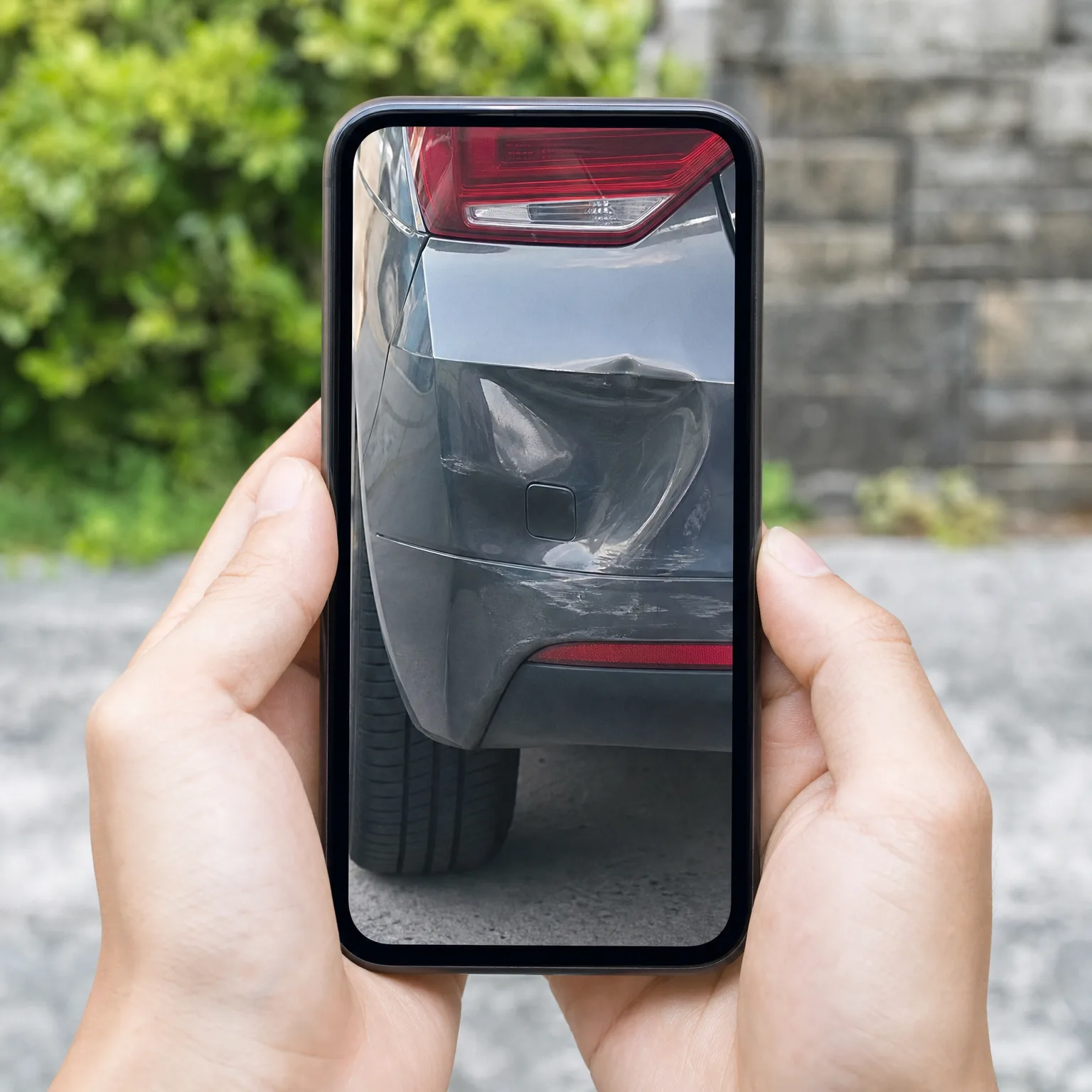
- Photograph everything Take pictures of both cars, the damage, the road, and any street signs or signals nearby. These photos matter more than memory once a claim starts.
- Call your insurer the same day Report the accident promptly even if you haven't decided to file a claim yet. Ask directly how this accident would affect your policy before deciding anything.
- Decide on filing together Talk with your grandchild about whether to file or pay out of pocket. Base it on the damage cost and your deductible, not on worry alone.
Once you know how this accident affects your policy, compare quotes to see what your options actually cost.

A driveway dent that didn't need to become a claim
A grandmother let her grandson borrow her car to drive to a summer job. Backing out of a parking space, he clipped another car's bumper. No one was hurt, and the damage was a scraped bumper on both cars. He called her right away, they exchanged information with the other driver, and he took photos before either car moved.
She called her insurer that evening to ask how a claim like this would affect her policy. The agent explained the likely effect on her rate going forward. Given the damage was minor, she and her grandson agreed to pay the other driver's repair cost directly instead of filing, since it came out cheaper than the likely rate impact over time. She kept the photos and the agent's notes in case the other driver changed their account later, but nothing further came of it.

Does my grandchild need to be on my insurance to drive my car?
Usually yes, if they drive it regularly. Insurers expect anyone who routinely drives a car to be listed on that car's policy, not just covered as an occasional guest driver. A one-time borrow is different from a summer of regular use. Check your insurer's definition of regular versus occasional use, since that's what determines whether your grandchild needs to be added formally.
Will my insurance rates go up after my grandchild's accident?
Likely, if you file a claim and your grandchild was at fault. The accident attaches to your policy because it's your car, and at-fault accidents typically affect rates for a period afterward. This is exactly why many grandparents weigh paying out of pocket for minor damage. Ask your insurer for specifics, since how much and how long varies by company and state.
Should I report the accident even if we don't file a claim?
Yes, telling your insurer is different from filing a claim. Reporting the facts protects you if the other driver files later or the story changes, since your insurer already has your account on record. It doesn't commit you to anything. Check your state's own reporting rules too, since some require police notification for any property damage over a certain point.